Garage Door Opener Repair in Provo, UT
Close to half of Provo's housing went up before 1980, which makes this the one city on the list where an opener repair regularly starts with a motor older than the safety standard it was never required to meet. Reading the unit is the first job, and it can be done without a label.
Ask Clark about this job
Tell Clark what the door is doing and he will call you back himself.
Garage Door Opener Repair · Utah County
The physical tells beat hunting for a date stamp.
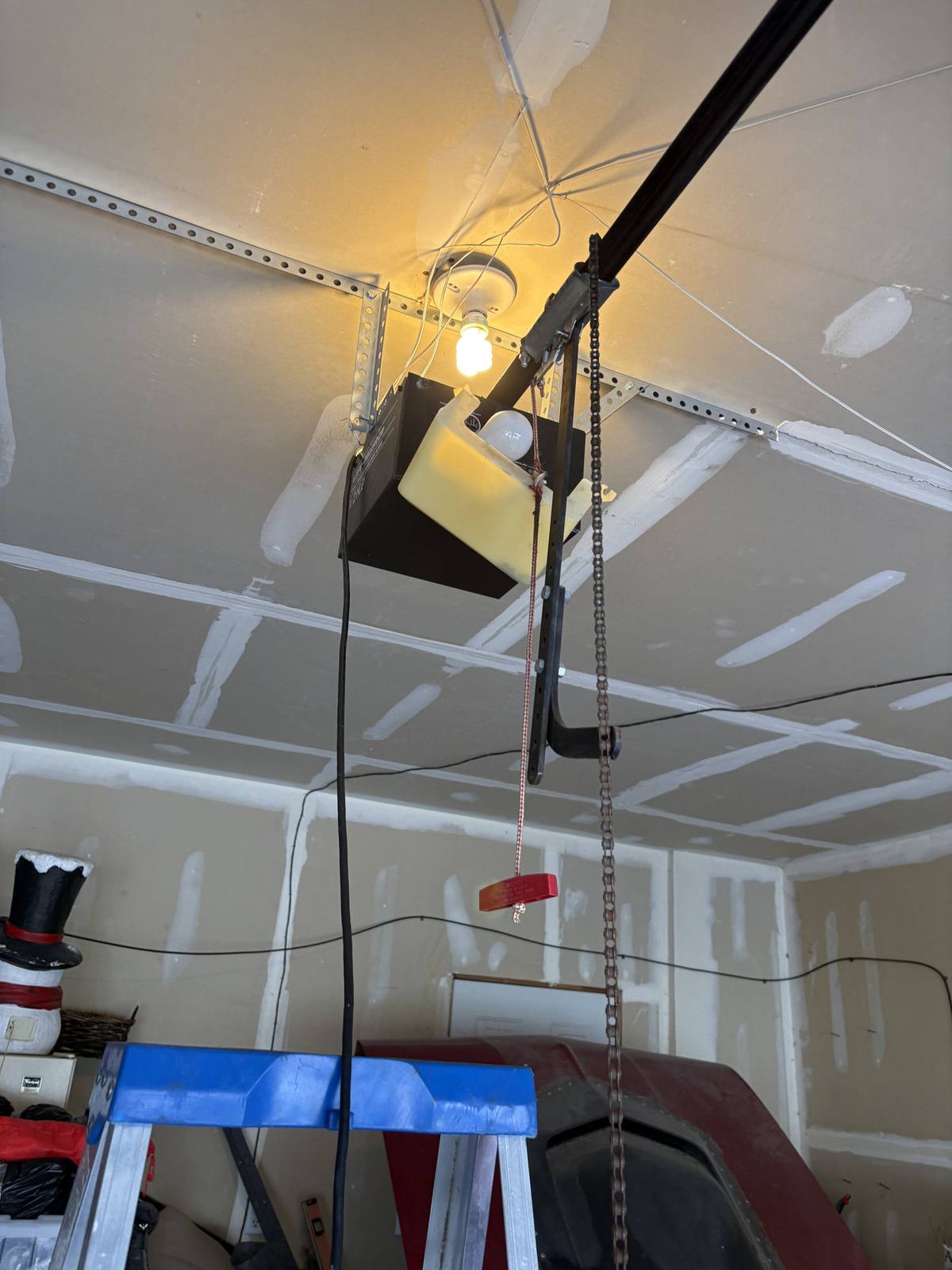
There are physical tells and they're quicker than hunting for a date stamp. A motor head with no terminals for external sensors was built before those sensors were required. A remote that's programmed by moving a row of tiny switches inside the case, rather than by pressing a learn button on the motor, comes from before rolling code became standard. A single large capacitor and mechanical limit screws rather than a logic board point the same direction. None of that's an inference about the house. It's what is actually screwed to the ceiling.
An opener from the switch coded era sends the same signal every time, and there are only so many combinations those switches can make. That was normal when the unit was built and it's not a fault. It's worth knowing because it's one of the practical arguments for replacing a very old motor that still technically works, alongside the entrapment protection it was never required to have.
Parts are where repair first meets arithmetic in Provo more than anywhere else. Drive gears, trolleys, capacitors, sensor pairs and wall controls are stocked items for units from the last two or three decades. For a motor from the early eighties the board is long out of production, the gear may have no aftermarket equivalent, and the limit hardware can be specific to that model with nothing else like it. Where the part exists the repair is worth doing and it gets done. Where it doesn't, you get told that rather than sold a diagnosis that leads nowhere.
The safety history has three outcomes in this city and all three are live. Inherent entrapment protection, the motor sensing resistance and reversing, became mandatory on the first day of 1991. External photo eyes were required from the first day of 1993. A Provo opener older than 1991 has neither, so a door closing onto something doesn't stop by itself and nothing at floor level is watching the opening. A unit from between the two dates has the reversal but may have no way to take the eyes. Anything newer has both.
The door underneath is lighter than a modern one, and that produces an effect worth naming. A light door hides a tired opener for longer. The motor has less work to do, so a stripped gear, a slipping trolley or a weakening capacitor can be present for months before the door actually stops moving. By the time the symptom is obvious the part has usually been failing for a while, which is why the whole assembly gets looked at rather than the one thing you noticed.
Before you call · Garage Door Opener Repair
Opener faults Clark sees most
- Motor runs and hums but the door doesn't move, which is normally a stripped gear
- One click and then nothing at all
- The door starts to close, then stops and goes back up
- The door stops a few inches short of open or closed
- The wall button works but the remotes don't, or the remotes are intermittent
- Grinding, rattling or a loud bang as the door runs
- The trolley moves but the door stays where it's, which means the arm or trolley let go
- The opener runs the door crooked, or shudders on the way up
Worth knowing before you call
- A door that's out of balance will destroy a new opener in short order. If the springs are weak, that gets said up front rather than discovered after the motor is hung
- New wiring for a dedicated circuit or an outlet in the ceiling is electrical work and belongs to an electrician, not a door tech
- A unit that's decades old, out of production and short on parts sometimes can't be repaired. You get told that plainly, including when the honest answer is that repair isn't the right call
Why this job goes to Clark
Get the door answering the button again.
The whole door gets checked
Springs, cables, rollers and track alignment are all looked at, because an opener fights a door that's out of balance and then gets blamed for it.
Symptom to part, not guesswork
A hum is a different repair from a click, and a reversal on close is a different repair from a stop on open. The symptom narrows it before anything comes apart.
Repair before replacement
Gears, capacitors, trolleys, sensors, rollers and logic boards are ordinary repairs. A new opener is a decision, not a default.
Questions · Utah County
Garage Door Opener Repair FAQ
My opener still works. Why would I replace it?
Working and safe are separate questions on a unit this old. A motor built before the first day of 1991 wasn't required to sense an obstruction and reverse, and one built before the first day of 1993 wasn't required to carry photo eyes near the floor. Neither can be added to a unit with no provision for them. If yours has both, keep repairing it. If it has neither, that's the reason to look at replacing it, not the age on the label.
My remote has little switches inside it. Is that a problem?
It's not a fault and it's not urgent. Those are the code switches from before rolling code openers, and they mean the remote sends the same signal every time. It's a fair thing to weigh when you're deciding whether an old unit is worth another repair, alongside whether it has any entrapment protection.
Can parts still be found for an old opener?
For a great many, yes. Gears, trolleys, capacitors, sensors and wall controls are available for most units from the last two or three decades. For a motor from the early eighties the board is usually long discontinued and the mechanical parts can be model specific with nothing equivalent made since. That gets checked against the model number before you're told a repair is possible.
The door is light and opens easily. Why is the opener struggling?
On a light older door that's often a sign the motor has been failing quietly for a while. A door that takes little force lets a worn gear, a slipping trolley or a weak capacitor carry on longer before anything obvious happens. The symptom showing up now doesn't mean the fault started now.
What customers say
10/10 highly recommend! I’ve been dealing with a frustrating garage door issue for over a year, having to literally get out of my car, walk inside, and hold down the wall button just to open the door. Clark came out today and fixed it in literally 10 minutes. He was fast, professional, and completely resolved a major headache. If you need garage door service, definitely give them a call!
Related services · Utah County